
Social media marketing ROI represents the return on investment generated from your content marketing efforts—the measurable business value created relative to resources invested. Understanding and optimizing content marketing ROI transforms content from a cost center into a proven revenue driver that justifies budget and demonstrates marketing’s strategic value.
Social marketing has transformed dramatically since the early days of Facebook and Twitter. What began as informal brand presence has evolved into sophisticated marketing ecosystems requiring strategy, creativity, analytics, and significant resources. Today’s social media marketing demands authentic engagement, value-driven content, and genuine community building rather than promotional broadcasting.
The shift toward social commerce, video-first content, influencer partnerships, and personalized experiences defines modern social media . Platforms continuously evolve their algorithms, features, and advertising capabilities, requiring marketers to stay agile and informed.
Strategic social media begins with clear objectives aligned to business goals. Are you building brand awareness, driving website traffic, generating leads, increasing sales, improving customer service, or recruiting talent? Different objectives require different approaches, content types, and success metrics.
Audience research forms the foundation of effective social media . Understanding who your audience is, which platforms they use, what content they engage with, when they’re most active, and what problems they face allows you to create relevant, resonant social media campaigns.

Not all platforms suit all businesses. Strategic social media focuses resources where your audience actively engages rather than maintaining presence everywhere. LinkedIn dominates B2B social media with professional audiences, decision-makers, and thought leadership opportunities. Instagram and TikTok excel for visual brands targeting younger demographics. Facebook remains powerful for community building and diverse demographics. Twitter serves real-time engagement and customer service. Pinterest drives e-commerce traffic for lifestyle and creative niches.
Each platform in your social media mix requires adapted strategies. What works on LinkedIn flops on TikTok. Understanding platform-specific norms, content formats, and user behaviors ensures your social media marketing resonates rather than alienates.
Content pillars organize your media marketing around key themes aligned with audience interests and business objectives. Most successful social media marketing strategies balance educational content that teaches something valuable, entertaining content that delights and engages, inspirational content that motivates and uplifts, and promotional content that drives commercial objectives.
The 80/20 rule suggests 80% of social media content should provide value while 20% directly promotes your offerings. This balance builds trust and engagement that makes promotional content more effective when it appears.
Video dominates social media performance across all platforms. Short-form video (TikTok, Reels, Shorts) delivers exceptional engagement and reach. Long-form video (YouTube, LinkedIn video) establishes thought leadership and deep connections. Live video creates authentic, real-time engagement.
Visual content—images, infographics, graphics, and carousels—drives higher engagement than text-only posts in social media marketing. Quality visuals that align with brand identity and platform aesthetics stop scrolls and encourage sharing.
User-generated content amplifies social media marketing by leveraging customer voices. Reviews, testimonials, photos, and videos created by customers build trust more effectively than brand-created content while providing authentic proof of value.

Consistent posting maintains visibility in crowded feeds. Your social media content calendar should plan posts weeks in advance, ensuring consistent cadence, balanced content mix, and strategic timing. Content calendars prevent last-minute scrambles and allow thoughtful content creation.
Scheduling tools automate posting across platforms, freeing social media marketing teams to focus on engagement and strategy. Tools like Hootsuite, Buffer, Sprout Social, and native platform schedulers maintain presence even outside business hours.
Responsive engagement separates effective social media from mere broadcasting. Answering comments, responding to messages, acknowledging mentions, and participating in conversations builds relationships and loyalty. Most users expect brand responses within hours, not days.
Community building creates spaces where audiences connect with each other, not just your brand. Facebook Groups, Twitter Spaces, LinkedIn communities, and branded hashtags foster user-to-user interaction that strengthens brand affinity and provides valuable insights.
Crisis management skills prove essential in social media . Negative feedback, viral complaints, or PR issues spread rapidly on social platforms. Having protocols for acknowledging concerns, providing solutions, and managing escalations protects brand reputation.
Organic reach limitations make paid social media essential for most businesses. Platform algorithms prioritize content from friends and family, limiting brand visibility. Paid promotion ensures your best content reaches target audiences.
Targeting capabilities make social media advertising extraordinarily precise. Demographic targeting, interest-based targeting, behavioral targeting, lookalike audiences, and retargeting allow you to reach exactly who you want when they’re most receptive.
Ad formats vary by platform but generally include image ads, video ads, carousel ads, collection ads, story ads, and sponsored content. Testing different formats reveals what resonates with your audience and drives best social media marketing ROI.
Influencer partnerships extend marketing reach and credibility. Influencers have built trust with their audiences; their endorsements carry weight that branded content often lacks. Micro-influencers with smaller, engaged followings often deliver better ROI than mega-influencers.
Authentic partnerships work best in social media marketing. Choose influencers whose values align with your brand, whose audiences match your targets, and who genuinely appreciate your offerings. Forced partnerships feel inauthentic and can damage credibility.
Monitoring brand mentions, industry conversations, competitor activity, and audience sentiment provides invaluable social media marketing intelligence. Social listening tools track keywords, hashtags, and brand mentions across platforms, revealing opportunities and threats.
Customer insights from social listening inform product development, content strategy, customer service improvements, and marketing messages. What are people saying about your industry? What problems do they discuss? What language do they use? This intelligence makes social media marketing more relevant and effective.
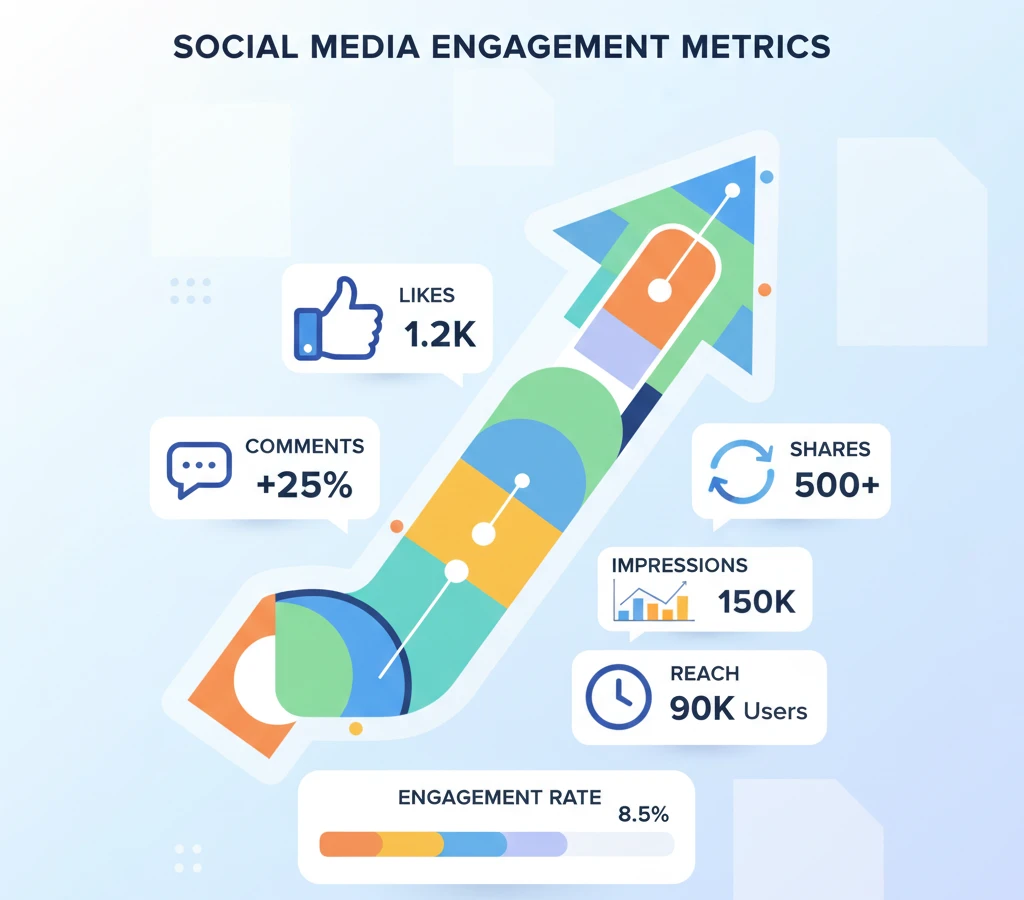
Data-driven social media requires tracking the right metrics. Vanity metrics like follower count feel good but don’t necessarily drive business value. Focus on engagement rate showing how actively audiences interact with content, reach and impressions indicating content visibility, click-through rate measuring interest in calls-to-action, conversion rate tracking commercial outcomes, and social media referral traffic revealing website impact.
Platform analytics provide robust data on content performance, audience demographics, optimal posting times, and engagement patterns. Third-party analytics tools aggregate cross-platform data for holistic social media marketing measurement.
Attribution tracking connects social media marketing to business outcomes. How many leads came from social? What’s the customer acquisition cost from social channels? What revenue can be attributed to social media efforts? These metrics demonstrate ROI and justify investment.

Shoppable posts transform social media marketing into direct sales channels. Instagram Shopping, Facebook Shops, Pinterest Product Pins, and TikTok Shopping allow users to purchase without leaving platforms. Reducing friction in the purchase journey increases conversion rates.
Live shopping events combine entertainment with commerce, creating engaging experiences that drive impulse purchases. Live demonstrations, limited-time offers, and interactive shopping sessions represent the future of social media marketing for retail and e-commerce brands.
YouTube marketing requires different strategies than short-form platforms. Long-form video content educates, entertains, and builds deep connections. SEO optimization for YouTube increases discoverability through search.
Short-form video on TikTok, Instagram Reels, and YouTube Shorts demands quick hooks, fast pacing, and entertainment value. The most successful short-form social media marketing feels native to platform culture rather than like traditional ads.
Empowering employees to share company content expands social media reach exponentially. Employees have networks brands can’t access; their shares carry more credibility than corporate accounts. Employee advocacy programs provide content, guidelines, and incentives for team members to become brand ambassadors.
LinkedIn employee advocacy particularly benefits B2B social media marketing. When leadership and team members share insights, company news, and valuable content, they build personal brands while amplifying corporate reach.
Artificial intelligence personalizes content, optimizes ad delivery, powers chatbots, and analyzes sentiment. AI tools help social media marketing teams work more efficiently and effectively. Augmented reality filters, virtual try-ons, and immersive experiences create engaging social media marketing activations. AR capabilities on Instagram and Snapchat allow brands to create interactive experiences that drive engagement and sales.
Social audio through Twitter Spaces, LinkedIn Audio Events, and Clubhouse creates new social media marketing opportunities for thought leadership and community building. Authenticity and transparency increasingly influence social media marketing success. Users gravitate toward brands that show behind-the-scenes content, admit mistakes, take stands on issues, and interact authentically rather than maintaining perfect, polished facades.

Effective social media marketing requires diverse skills: strategy and planning, content creation and copywriting, graphic design and video production, community management, paid advertising expertise, analytics and reporting, and crisis management.
Small businesses might consolidate these roles in one or two people, while enterprises need specialized teams. Outsourcing to agencies like Mind Frame Global provides expertise across all social media marketing functions without building full in-house teams.
Budget allocation depends on goals, platforms, audience size, and competitive intensity. Consider costs for content creation, paid advertising, social media management tools, influencer partnerships, employee time, and agency or freelancer support.
Testing and learning approaches allow efficient budget allocation. Start with modest investments, measure performance, and scale what works while cutting what doesn’t. Social media marketing rewards experimentation and optimization.
Social media marketing has evolved from optional nice-to-have to essential business function. The platforms where your audience spends hours daily offer unparalleled opportunities to build relationships, drive engagement, and generate business results.
Success requires strategic thinking, creative execution, consistent effort, and continuous optimization. Whether building presence from scratch or optimizing existing efforts, effective social media marketing delivers measurable value that justifies investment.
Mind Frame Global develops comprehensive social media marketing strategies that drive engagement, build communities, and deliver ROI. From strategy development to content creation to performance optimization, we help businesses maximize social media marketing impact.