
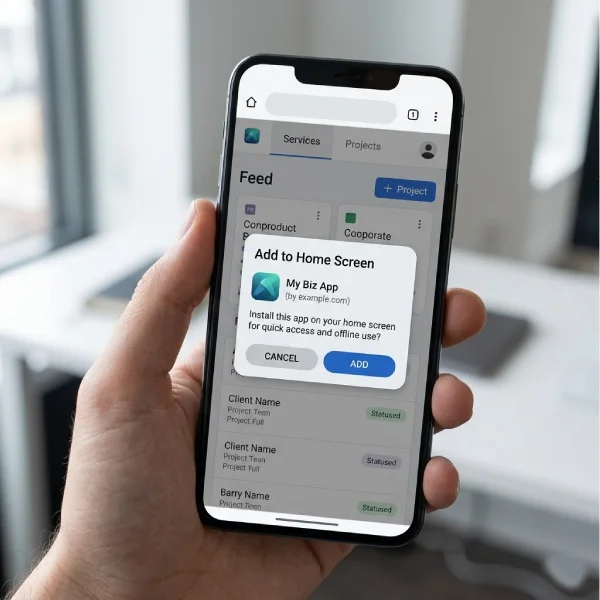
Progressive Web Apps occupy the best of both worlds between a website and a native mobile app. They load instantly, work offline, can send push notifications, and can be installed directly from the browser to a user’s home screen — without requiring submission to the App Store or Google Play. For Phoenix businesses that need app-like experiences without the development cost, maintenance burden, and distribution friction of native app development, PWAs are increasingly the right answer.
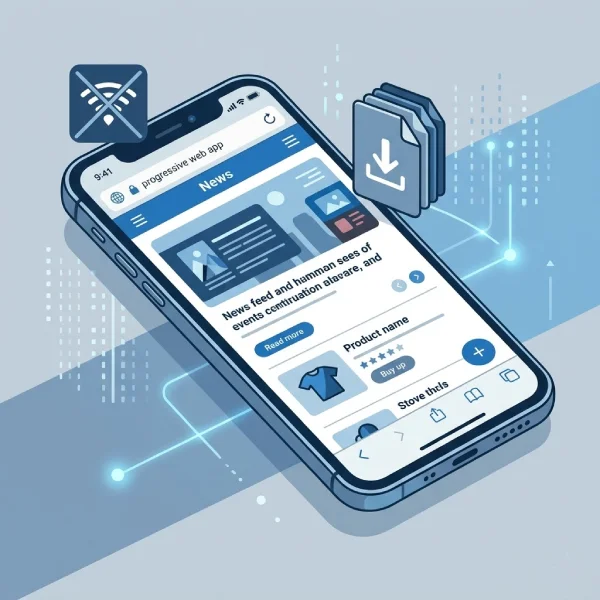
• Service workers: background scripts that cache content for offline access and enable push notifications even when
the browser is closed
• Web App Manifest: a configuration file that enables installation, defines the app icon, splash screen, and display
mode for a native-like launch experience
• HTTPS requirement: all PWAs must be served over HTTPS, which is now standard but ensures a security baseline
• Responsive design: PWAs work across all screen sizes and are optimised for mobile interaction patterns
• App shell architecture: the core UI loads instantly from cache, with dynamic content fetched in the background for
perceived performance that feels native
We will assess whether a Progressive Web App is the right solution for your Phoenix business and what building it would cost.
Crafting compelling narratives and strategic content to elevate brand presence and engage target audiences effectively.
Strategic planning and innovative approaches to drive brand success and surpass marketing objectives dynamically.
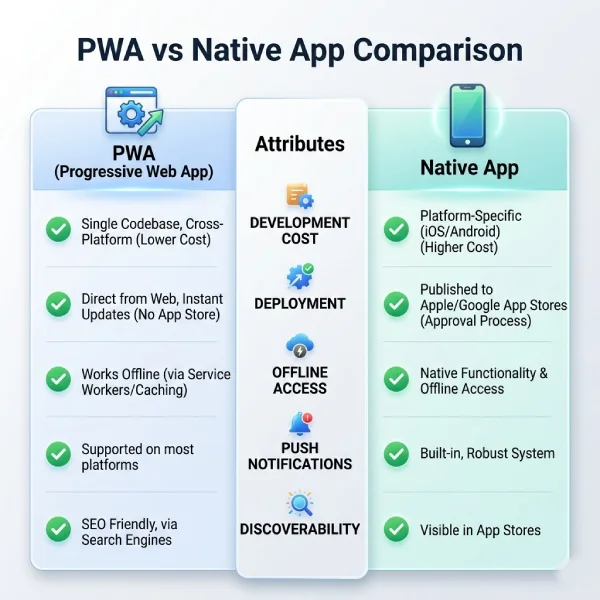
PWAs make the most sense when your core user experience can work offline or with intermittent connectivity, when you want to avoid App Store fees and review delays, when your budget does not support parallel iOS and Android development, and when your audience primarily accesses via mobile browser rather than existing apps. Common Phoenix PWA use cases: field service apps for construction and home services companies, ordering systems for restaurants and food businesses, customer portals for professional services firms, and loyalty programme apps for retail.
Native apps still win for: applications requiring deep device hardware access (camera, GPS, Bluetooth, NFC), applications requiring the highest possible performance, and businesses whose audience expects to find them in the App Store. For everything else — especially service businesses, B2B tools, and content-driven applications — a PWA typically delivers 80% of the user experience at 40% of the cost.
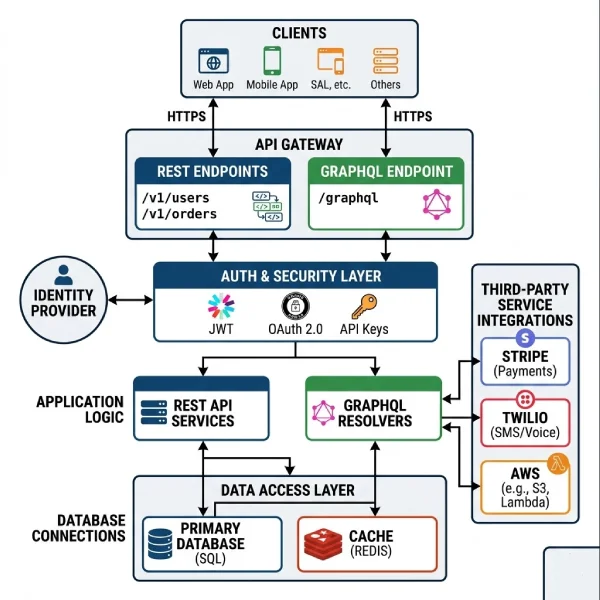
Discovery and architecture, service worker design, offline strategy, performance budget setting, development, Lighthouse audit (targeting 90+ score across all categories), cross-device testing, and launch. We build PWAs with React, Vue, and Next.js depending on your specific requirements.